
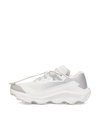
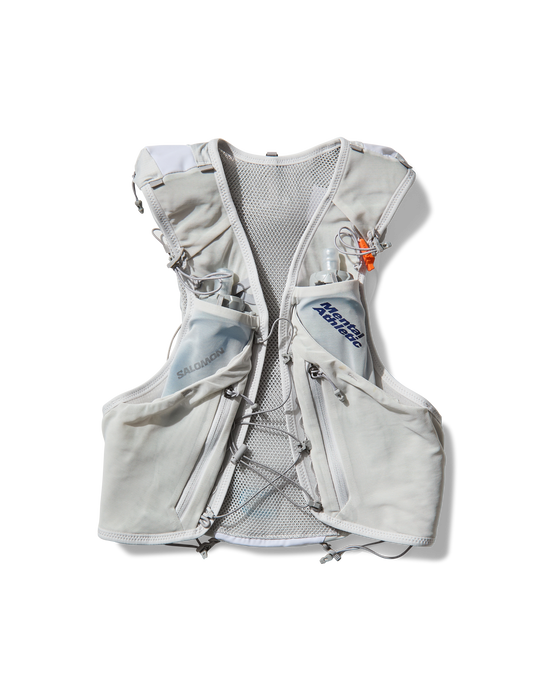


Being unnoticeable takes hours of work and commitment as does designing products that are seamless for all runners. It’s an almost impossible task for everyone but Ardith Singh, the co-founder and chief design officer of Bandit. We meet to talk about how Bandit is a female-designed brand that has taken over America’s running scene, but as we dive deeper into her design process I realize the angle isn’t about how she’s breaking into a performance activewear space that’s primarily dominated by men, but instead it’s about what it looks like when you have a designer that really cares and doesn’t ever want to step back and stop innovating. She’s always tinkering with fabrics, pockets, designs, etc. based on feedback she gathers through DM’s, community testing, personal emails, and Reddit threads. Thoughtful designs are how she takes care of people and builds a real community.
Just Keep Pushing

Michelle Li:
I love that you reference artists like Joseph Albers, Dan Flavin, Luis Barragan, etc. in your designs, can you talk about your process for digesting that inspiration into Bandit’s designs?
Ardith Singh:
I always start with the mentality of the runner and then how it could be interconnected through art and design in a more esoteric way. I’m also pulling from vintage designers for silhouette ideas — I love looking at Jil Sander’s work from the 90’s. So many great clean lines, beautiful jackets. She doesn’t consider herself a minimalist and instead calls herself a purist.
For Spring 2026, it’s all about thawing and coming out of the worst time to train ever. I’m thinking about physically defrosting and entering a new moment where things start to click and become easier.
ML:
Who’s the artist for Spring 2026 that you’re referencing?
AS:
Helen Frankenthaler came to mind because of the soak stained techniques she uses throughout her work. She creates these large scale pieces with big swaths of colors and it feels like they are melting and dancing across the canvas. Her work is really fluid and has a lot of organic movement which I connected with the runner going into that similar type of flow state. When we think about entering a flow state, we consider how it happens deep within yourself and then how it also connects to the community around you.

ML:
How do you find your flow state as a designer when you’re also juggling responsibilities as a co-founder?
AS:
It can be really hard and there's a lot of other distractions. I think trusting yourself and having patience in the process. Sometimes I’ll remove myself from the office. I’ll go and get lost for an entire day. Go to MoMA or a vintage bookstore I love in Newport, RI. I know that when it feels hard, it's not right yet. You have to keep massaging a concept or design and then it all falls into place and I can’t be pulled away from the process.
It's really about keeping yourself open at the right times to receive that inspiration, don’t stress out. Know it’s going to come, just listen and be ready to receive it and always have a curiosity to follow the little nuggets and ideas. They might lead you down somewhere really deep, or they might not go anywhere. Knowing that you don’t have control over it, be aware and ready to absorb and let anything in. Who knows what's gonna come out of it?
ML:
I feel like your approach to community is similar to this as well. From past interviews, it sounds like you’re open to all feedback.
AS:
We have community centered design feedback loops that are happening informally and formally. And those are important parts of our design process because we can take everything into consideration and keep their feedback top of mind as we design for the next collection.
I feel really grateful for our community, it feels like I have a whole group of people that don't always love everything or agree with everything, but they're always willing to share their experiences. We have a really special relationship. And we don’t take the responsibility lightly when people are choosing Bandit for these pinnacle moments in their racing season.

ML:
I love that you’re so encouraging with the community about sending you DM’s and emailing you personally.
AS:
This is critical for me in the design process. We talk a lot about scale and about how it’s really up to us to keep the feedback loop strong and prioritize it. You really have to put your ego aside and listen. I've had people give me feedback about a zipper and then they'll see in two seasons, "Oh, you change that zipper?”. They’re seeing their voices heard in real time through the product. You’re going to hear the good, the bad, and the ugly.
ML:
I read somewhere that you’re also looking at Reddit and reading through the feedback there.
AS:
Sometimes reading Reddit is really tough. They're brutal there. People are like, "Why do you read that? You're crazy. Don't read it.” but I really believe that there’s something I can take from it. Even if it's something like, "Oh, they're not realizing what this end use is for. They're using it for something different." It helps us realize that we’re not marketing this right or using the right language. There’s always something you can learn.
ML:
You make concepting, design, community all sound so fun and it shows in your collections every season. They’re so inspired. What do you feel like the challenges are when it comes to designing specifically for runners?
AS:
We're always trying to solve the challenge of trying to make something that works for everybody. Runners in general need the same things like wicking sweat away from their body, no chafing, for the clothes to stay in place, storage for fuel and phones. But to be honest, the biggest challenge is something that we all already know. I've known my entire career that every physical body is different (shaped differently and reacts differently to fabric and sweat).
Once we fix one thing, it could bring a new challenge to light. But to me, that’s the science of it. But it is challenging to create a performance product that can work for a large demographic of people.

ML:
Is there something that you fixate and obsess over every single season?
AS:
Fabrics. All sorts with fabric. It’s critical. I obsess over the way it performs, the way it looks, the way it feels on the body. How does it feel on the first three miles? How does it feel when you're at 18 miles? I want people to put our designs on and never think about it again. We’re always pushing fabric innovation even if a fabric is a best-seller for multiple seasons. We’ll listen to the community and look into the yarn composition and various innovations. I could make a million things that are really cool looking, but if the fabric doesn't perform, it really doesn't matter. It has to evolve until we’re getting zero feedback. That’s our job.
ML:
When it comes to designing for runners — how is it gendered?
AS:
Our first two seasons, we had the same compression fabric for men and women. Men loved it because it kept everything in place, but women were looking for something more versatile. They used it for pilates class and needed a fabric that could take them through more things. So we went back to the drawing board and we did like a four way stretch interlock, it’s much more malleable on the body. You can wear it for anything.
In the short time that we’ve been producing products, I’ve noticed that men are now looking for more versatility too. Men are seeing how women are able to make performance wear a part of their wardrobe (and our male community has so much style!) They want to do it too. I am conscious when I’m designing to make sure there are elements that people can identify with personally and slice into their current wardrobe. I never want people to be throwing away their existing self in order to participate in what we’re doing here at Bandit.
ML:
Have you had your moment at Bandit where you feel like you’ve made it?
AS:
I don't think I’ve had that yet. Always pushing the bar. We really have been trying to be better about celebrating and stopping for a moment to celebrate where we’ve come from and where we are today. Every day, it's like, pushing a really heavy piece of furniture across the room. Every single day. There's not a day that we say "We got it.” Startups, right? It is not for the faint of heart. It's 24 hours a day, seven days a week. You have to be totally obsessed with what you're doing, and you have to be totally obsessed with our community. To see the 25 people we have at Bandit just living and breathing that is really special.
Watching my team grow into stronger designers, shaping people’s careers, how they’re becoming more creative, and the way that they think about the world, that’s feels like something really special. That’s when I feel like I did something.

ML:
It’s beautiful to hear about the community that you foster at Bandit externally but also internally and how your approach consistently carries over through design and leadership. What do you personally want your legacy to be?
AS:
Always putting the athlete first. There’s this empathy piece to it, empathy for the athlete and listening to them and thinking about them constantly. I want my designs to make them feel like the absolute best version of themselves, no matter who they are.
ML:
What’s the big vision for Bandit — in 5, 10 years? Where do you want the brand to be?
AS:
That is a hard question. I see us as a global running brand. I want to see us everywhere. I want people in Australia to be racing in Bandit and in Indonesia racing in Bandit. I think we’ve created this feeling that really transcends product, that when you’re on vacation in Barcelona and you're out for a run and you see somebody else Bandit, and you're like, "Oh. We're the same. We’re in the same movement.” I want everyone to feel that and I love that sort of unspoken connection in our community.

ML:
I love that Bandit was born in New York City and it’s credited a lot for shaping Bandit’s culture. How has Bandit changed NYC’s running culture?
AS:
What I love about New York City is that it's never stagnant. It can't be. Like, it's impossible. Every single community in New York shapes New York. I think we've made an impact by putting the runner first. For example, our Bleecker St location is how you get to the West Side Highway. We open at 7 AM so you can come in before you’re run. In the summer, if you’re a woman and you want to run in your bra on the West Side Highway, you can come in, take it off, leave it on the shelf, go for your run, come back, have a coffee, and put your shirt back on. Our stores are not about the transactional relationship, it’s about listening to what the neighborhood needs.
ML:
What are some of the craziest things you’ve had to deal with as the co-founder of Bandit running these past five years?
AS:
Oh my God. So many. We're a tiny team and we take on a lot of big ideas. Most of the time we execute them, but sometimes there are hiccups. Like Boston last year all of our products were held at FedEx. Our production planner literally drove to JFK his first week to try to get it, banging on the windows at customs. The LA store had so many delays that it was fully built in 72 hours. It was unbelievable. For our Chicago pop-up (which was our biggest experiential), we had an insane wind tunnel built for our campaign that we brought and we were painting it as people were lined up outside. In August, I booked a flight to our printing facility in Portugal to get the strikeoffs approved so that we’ll get the product on time. No idea is crazy. However, it has to get done and across the finish line.
I'm never gonna ask you to do anything that I'm not willing to do. Never. We're taking out the trash, and we're planning for 2026. All the things.