





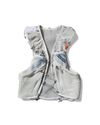

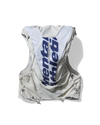



There’s a recurring image in the story of Michael Washington, founder of the Los Angeles-based community USAL: a late-night party still buzzing, and him stepping out with a packed van. While everyone else heads home, he leaves. Not in a dramatic way—just casually, like it’s normal. Destination: nowhere, or whatever sits a few hours outside the city. “I was the guy working in music, out super late, but I already had my van packed,” he says. Friends would look at him like something was off. Where are you going? Why? Then the next morning they’d wake up hungover, scrolling, and he’d be somewhere completely different—on a mountain, in the desert, in the ocean—already hours into another version of the day.
USAL: City Kids Go Wild
Images by: USAL Words by: Daria Miricola


That split became a rhythm. City at night, nature in the morning. Noise, then silence. And somewhere in between, a realization that feels obvious once you see it: you don’t actually have to choose between the two. The problem isn’t the city. It’s the idea that it has to be everything.
Before USAL, it was just him figuring that out in real time. Surf trips up and down California, driving with no real plan, slowly clocking how much was out there and how close it all was.
Ocean, mountains, desert—five hours, give or take. “It’s crazy we just stay in the city,” he says. “There’s so much around, and it’s not even far.” What changed wasn’t just where he was going, but how he was living. He’d still show up, still be part of the scene, still work in music, still go out. But he’d also leave. A lot. And that back-and-forth started to feel less like an escape and more like balance.
Then COVID hit, and whatever thin line existed between those two worlds snapped. The city shut down, everything got weird, and suddenly staying inside felt more unnatural than leaving. “I was like, what am I doing sitting in my apartment?” So he didn’t. He leaned all the way in—living out of the van, moving constantly, staying outside as much as possible. But the bigger shift was that he became a beginner again. He started asking people to show him things. Spearfishing, free diving, climbing, trail running. “I was just like, take me, teach me,” he says. No ego, just curiosity.


At the same time, people started hitting him up. Not in a big, viral way—just steady, direct messages. How are you doing this? Where do you go? How do I start? And he realized something: he didn’t really have a clean answer. Not because it was complicated, but because there wasn’t a clear entry point. Nothing that spoke to people like him or his friends—people who live in cities, who are into culture, who don’t identify with the classic outdoor world. “We’re not outdoorsy people,” he says. “That’s the thing. We don’t look like that, we don’t come from that. But we still want it.”
USAL came out of that gap. Not as some big plan, more like a response. What if you just made something for those people? Something that feels familiar, but opens a door. Instead of traditional guides, he brought in friends—artists, filmmakers, people with regular jobs who, on weekends or whenever they could, would go out and do something different. Fish, climb, run, build, explore.


“They’re just normal people,” he says. “But they’re inspiring. And it makes it feel possible.”
It picked up fast. Events filled up, then doubled, then kept going. Soon it was dozens every month. Different cities, different formats. But the point was never scale for the sake of it. It was access. The activities vary widely—running, foraging, ceramics, building, whatever makes sense—but that variation is the whole thing. There’s no single version of what this looks like. No uniform, no fixed identity. Just different ways in.


And that’s what makes it click. You show up as you are. No need to switch personalities or adopt a new look just to be outside. “We’re not trying to change people,” Washington says. “We’re just showing them it’s there.” The crowd reflects that. People you wouldn’t expect to see on a trail. Different backgrounds, different styles, different reasons for being there. No one really matching, but somehow it works better that way.
The idea that keeps coming back, in different forms, is simple: you don’t need to escape the city to find balance. “I don’t want to live in the middle of nowhere,” he says. “I love cities.” The energy, the mix of people, the culture—that’s not something he’s trying to replace. But staying in it all the time starts to wear you down. “It’s like a drug,” he says. “Too much of it, and you feel it.” So you step out. Not forever. Just enough. A couple of days, sometimes less. Then you come back. And it hits differently.


That’s the rhythm. Not rupture. You don’t burn your life down and move off-grid. You adjust. You move between things. You recalibrate. And over time, that becomes its own kind of lifestyle—not extreme, not performative, just functional.
A lot of what holds it together is intention. Not in a heavy, overdesigned way, but in how things are put together. Washington comes from music, so he thinks in terms of feeling, sequencing, presentation. “It’s not just what you do,” he says. “It’s how it comes across.” That shows up in everything—the visuals, the tone, the way events are structured. Whether it’s a run or a dinner or something in between, it’s meant to feel like something. Not random, not generic.
That thinking also led to building a physical space—a base where things could start and come back to. A store, an event space, something that sits right at the edge of the city, close enough to the trails that you can just go. It’s practical, but it also makes the idea real. This isn’t abstract anymore. It exists somewhere.


Even as it’s grown, the core is still small. A tight group, plus a wider circle of people who keep coming back—guides, photographers, friends who’ve been there from the beginning. “It feels like a family,” he says. And that consistency shapes everything. The tone stays intact. The people who come tend to get it. It hasn’t tipped into that thing where it blows up and loses itself.
Looking ahead, the idea stretches further out. Land. Space. Something more permanent. “A place where we can build everything together,” he says. Not just events, but something ongoing. Workshops that turn into structures, people contributing to something physical, learning directly from being there. It has echoes of those old California commune experiments, but less utopian, more grounded. Not disappearing from the world, just building something alongside it.


At the core of all this is a shift in how nature is framed. For a long time, it’s felt coded—like you had to look a certain way, know certain things, belong to a certain type. “It didn’t feel like it was for people like me,” he says. What this does is strip that away. Or at least loosen it. Show that there’s no single way in.
The lives around it vary widely—what people do, how they show up, where they come from, what they’re looking for. That’s not a side effect. That’s the structure. You don’t need to pick one version of life and stick to it. You can move between things. You can build your own mix. And somewhere in that movement, something shifts—not dramatic, not overnight, but enough to feel it.