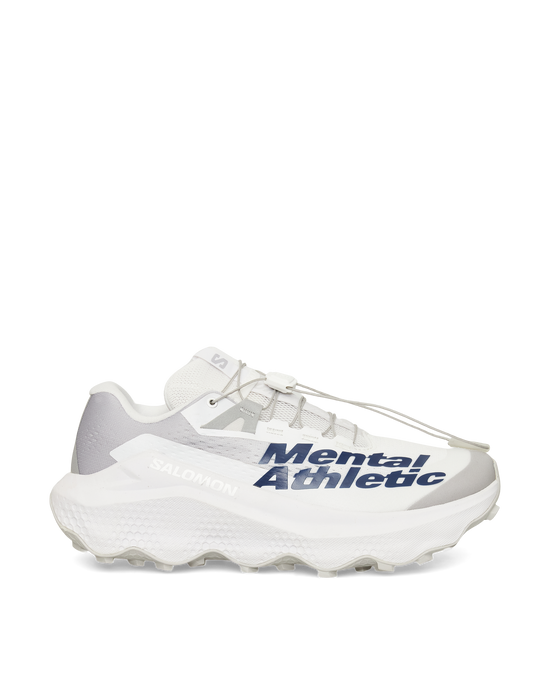


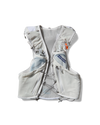



As Mental Athletic keeps circling the hidden corners and wilder idiosyncrasies of cycling, this time we turn to William Hacker, the newest addition to our roster of (un)athletes. He’s a New York–based rider who treats the city’s traffic as his playground and lives by the motto “eternally pushing my luck.” Slammed stems, sprints to beat the light, slaloms between cabs and pedestrians: just another day at the office. To welcome him on board, we step off the saddle and sit down with him to talk about adrenaline as a form of calm and pure focus, and about the need for struggle left by a strict Catholic upbringing. He also shares the few rules that keep a rider with no rules alive, explains why crashing is a skill you can master, and recalls the day he ended up dragged behind a box truck down Fifth Avenue.
WILLIAM HACKER
INTERVIEW BY MARCO PICCARDI

Marco Piccardi:
William, your motto “eternally pushing my luck” pretty much sums up what you post. How much luck is there actually in cycling?
William Hacker:
First off, it should be noted that my idea of “luck” is probably different from most people’s. My idea of luck is crashing but walking away with a broken bike or wheel and some road rash, not ending up in a hospital bed with a bunch of broken bones. That being said, I can’t really say I believe in any kind of luck. I believe in the law of averages and the statistical chance that, riding the way I love to ride, it’s inevitable that I will crash. The only thing I can do is use my experience to try to mitigate the damage. I like to tell people that what I’m really great at, above all else, is crashing. Just like anything else, crashing is a skill in itself, and the more practice you have, the better you become at taking nasty spills and limiting the damage. There are so few opportunities in life that not only require but demand your absolute focus, that push the limits of how fast your body can react to what your eyes and brain are telling it to do. But once you’re inside that space of pure focus, riding that knife’s edge between serious danger and absolute joy, it’s a feeling I’ve never really been able to achieve with anything else. Not to mention the massive amount of adrenaline it gives you.


MP:
Slammed stems, low backs, sprints to clear the overpass or beat the light, then an almost nauseating slalom between pedestrians, cabs, cars, and anything else that inhabits the streets of NYC. This is decidedly not commuting, but it has the flavor of a rebirth of the fixed-gear, brakeless world of bike messengers: the thrill of barely squeezing between two cars closing in on you, of something popping out at the last second from behind a bus. Yet it all feels precise. Would you call it a calculated art of risk?
WH:
There’s no question that it’s a calculated risk, but I think most people, especially those who haven’t cycled in NYC, see the way we ride and overestimate the actual risk by a fair margin, because risk is relative, right? When I watch pro bull riding, I think, “Wow, these guys are gonna have short lives,” but in reality, the actual risk of fatality is pretty damn low, because they’ve spent a large portion of their lives honing the skills needed to ride a 1,500-pound bull for eight seconds and walk away (usually). At the end of the day, it’s obviously risky, but it’s also incredibly liberating, and for now those feelings outweigh the risk. I think of riding in NYC as a bit of a performance: each city has its own specific, unique language, and the more fluent you become in it, the easier it is to express yourself.


MP:
Word is you ride with no rules. Are there actually some rules you need to respect in order to ride without them?
WH:
Yes, there are loads of rules, and I’ve gotten really good at learning which ones are the most important to follow in order to stay alive. First, never underestimate what a driver is capable of. I see all these cyclists getting into it with drivers and then riding right in front of their car to piss them off. You have to remember that, like it or not, these guys are behind the wheel of something that will crush you, so don’t take stupid risks for the sake of pride or whatever. (There are a lot of ways to get back at a car or driver without risking your life.) Second, always expect the absolute worst thing to happen in every scenario while riding your bike. Expect that the car is going to run the red light, expect that someone’s driving on the wrong side when you’re ripping around a fast corner, expect the driver of every car to be having the worst day of their life and want nothing more than to take you out because you pissed them off. If you always expect the worst, you’re going to be fully locked in and focused, so you can be ready to avoid every shit scenario that comes your way.


MP:
Let’s talk about adrenaline. What does it actually mean to you?
WH:
I think for most people, the word adrenaline has a connotation of something that’s very loud and intense . . . like if Evel Knievel were a feeling or sensation. For me, I associate adrenaline with this clean, beautiful purity—blissful, even calming. There are so many distractions in our lives and so few opportunities that require absolute focus, the kind of focus that obliterates any other thought in your mind and narrows your mind down to this really beautiful, pure state.
MP:
If your riding style were a bad habit, what would it be?
WH:
Maybe crack or heroin? With drugs, you always develop a tolerance and have to do more and more to get the same feeling as the first time. I think it’s similar with my riding, or with any kind of extreme sport. I have to keep pushing myself to take more and more risks—go faster, squeeze through gaps I know I shouldn’t—in order to get the same kind of sensations as when I first started.


MP:
Do you live your life as an ongoing challenge?
WH:
Oof. I’m not sure “challenge” is the right word—maybe “struggle”? I grew up in a really strict Catholic family, and if there’s one thing Catholicism ingrains into you, it’s the importance of struggle and suffering. Ever since I can remember, I’ve felt this intense need to be struggling against something in one way or another. I have a real hatred of fear; I can’t stand the feeling of being afraid, and I’m constantly trying to fight against it and overcome it in any way I can, both in cycling and in most aspects of my life. I feel really guilty and uneasy if I’m not suffering or struggling in some way. Damn, this seems kind of unhealthy!


MP:
And who is William Hacker when he’s not riding through traffic?
WH:
Loaded question! I think most people would be surprised at what my life looks like apart from what they see. I’m a pretty intense person—I need to feel things very strongly, or else I feel like I’m wasting time. So whether it be cycling, art, music, or film, I’m always in search of things that evoke or require a lot of expression.
MP:
What’s the most New York thing that’s ever happened to you on a bike?
WH:
God, there are so many. Years ago, when I first started ripping pretty hard in the city, I was going down Fifth Avenue and skitching (holding on to the back of a truck) on this box truck, and I wasn’t paying attention. I hit this big pothole and lost control of my bike, but I kept hanging on to the metal handle on the back instead of going down with the bike. The next thing I know, the bike is swept out from underneath me and I’m being dragged behind this truck—but there are these platform things on the back of all these trucks, so I pull myself up onto that and start pounding on the side of the truck, trying to get the driver’s attention, because he had no idea this whole fight for survival had been taking place, and he just continued driving. Finally, he looks in his mirror, we make eye contact, and he stops so I can jump off. I’ll never forget the absolute bewilderment and confusion on that dude’s face. So yeah, at that point my bike was like three blocks behind me, so I ran back and grabbed it. It was amazing—people were looking at me like I was an absolute maniac.
MP:
Last one. What’s something you used to obsess over as a cyclist that you’ve completely let go of?
WH:
I can’t think of anything I used to obsess over that I don’t now. If anything, I obsess over everything more now.